
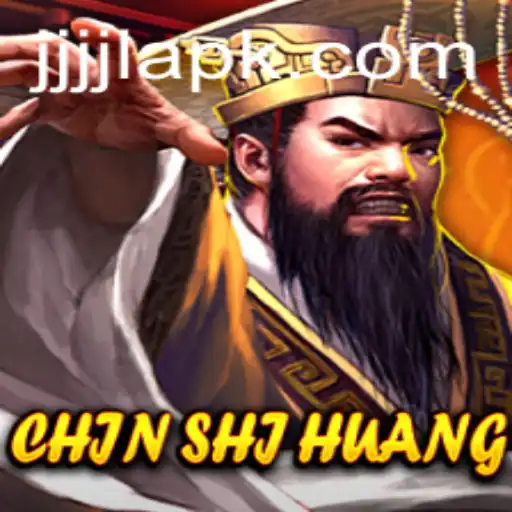

Explore the intricate world of ChinShiHuang, a strategy game that combines history and entertainment with modern twists.
ChinShiHuang: An Ancient Strategy Game for Modern Times
Introduction
Incorporating ancient history into modern gaming, ChinShiHuang offers players a unique opportunity to delve into the era of the first Emperor of China. The game intricately combines elements of strategy, resource management, and historical context to provide an immersive experience. In recent years, board games like ChinShiHuang have gained immense popularity, emerging as a favorite pastime among various age groups. The game is named after the first Emperor of a unified China, Qin Shi Huang, who is known for the unification of the warring states and commissioning the Great Wall of China.
Gameplay and Mechanics
ChinShiHuang is a captivating strategy game that invites players to build and expand their own empires. With a focus on strategic thinking and planning, the game's objective is to achieve dominance through military conquest, economic stability, and political influence. Players take turns building various structures, accumulating resources, and deploying armies, all while navigating challenges that mirror those faced by the historical emperor.
The game board is a detailed map representing ancient China. Players can choose different starting points and customizations, which aligns the game with historical settings but adds a fresh perspective with every playthrough. The core mechanics involve resource allocation, upgrading cities, and fortifying defenses. Additionally, players must manage their political influence by forming alliances or choosing aggressive strategies to outmaneuver opponents.
Unique Elements
One of the distinctive features of ChinShiHuang is the use of the keyword "JJJJL," which stands for key actions—Jin (Enter), Ju (Occupation), Jie (Resolve), Ji (Attack), and Liu (Sustain)—that guide players through decision-making in unforeseen events, much like the real historical challenges faced by Qin Shi Huang. Under this system, players are encouraged to think critically about their moves as each decision impacts the broader strategy.
The alliance factor introduces a dynamic diplomatic aspect to the game. Players can broker pacts for mutual benefits or choose war tactics, each presenting its own risks and rewards. Another element is modernization cards, which allow players to introduce modern dynamics into their empire, drawing parallels between ancient governance and contemporary strategies.
Current Events and Relevance
In recent years, strategy games like ChinShiHuang have seen a resurgence, attributed to an increased interest in educational entertainment. As the world grappled with the COVID-19 pandemic, people turned to board games as a means to engage with friends and family in more meaningful ways. This revival of interest has also been fueled by an increasing awareness and appreciation for world history and cultural exploration, which ChinShiHuang embodies by bringing lessons from the past into present-day play.
The game has also inspired discussions about leadership and governance through its portrayal of Qin Shi Huang. Many players draw parallels between the leadership qualities required in the game and those observed in modern political and corporate spaces. These discussions underscore the game's educational value while offering insights into effective leadership amidst political turbulence.
Rules and Strategies
Understanding the rules of ChinShiHuang is crucial for a successful game. Each player starts with a set of resources and a limited area of influence. The primary goal is to expand one's territory through strategic alliances and military conquest. The game is structured in rounds, each representing a year in the emperor's reign. During a round, players perform key actions based on the "JJJJL" mechanics to enhance their empire.
Players must carefully manage resources, including labor and raw materials, to build new structures and improve existing ones. Military units are used for territorial expansion, while political maneuvers help in shifting power. Throughout the game, players encounter event cards that introduce historical challenges, requiring them to adapt their strategies accordingly.
Advanced strategy involves anticipating opponents' moves and strategically positioning one's military and political resources to optimize defense and attack. A balanced approach between aggression and diplomacy often leads to victory, but the path to triumph requires careful adaptation to changing game dynamics.
ChinShiHuang also integrates resource trading among players, facilitating market dynamics and economic strategies reminiscent of historical trade routes. This feature further enriches the gaming experience, as players negotiate trade agreements that can significantly alter their path to victory.
Moreover, the strong emphasis on historical events provides players with a grounded understanding of the challenges faced by the historical Qin dynasty. This not only serves as entertainment but also as an educational tool that enhances the player's knowledge of Chinese history.
Final Thoughts
ChinShiHuang offers a remarkable blend of history and strategic gaming, appealing to enthusiasts of all ages. Its complex mechanics and historical basis provide endless opportunities for learning and discovery. As new expansions and digital versions are anticipated, ChinShiHuang continues to capture the imagination of gamers worldwide, proving that lessons from history can be both enlightening and immensely entertaining.